

Women Behind the Screen. Race and Gender Politics in the Hollywood Film Industry
Note: This article, which partially builds on the author’s doctoral research, forms part of a broader project, the findings of which have been presented at various academic conferences.
The systematic exclusion of women, especially women of color, from Hollywood’s gatekeeping institutions underscores the enduring dominance of white male perspectives in shaping not only American cinema but also the global narratives that are widely circulated and consumed. To put it differently, women’s marginalization in Hollywood reflects a wider global trend—a collective push across nations to reclaim storytelling power and assert control over visual representation beyond dominant and dominating film industries. Drawing on a combination of in-depth interviews and critical engagement with relevant literature, the article interrogates the complex intersections of gender and race that mediate access to power and visibility in the cinematic field. The analysis reveals that entrenched gendered and racialized hierarchies persist in shaping which narratives are legitimized, the modes through which they are conveyed, and the individuals authorized to tell them.
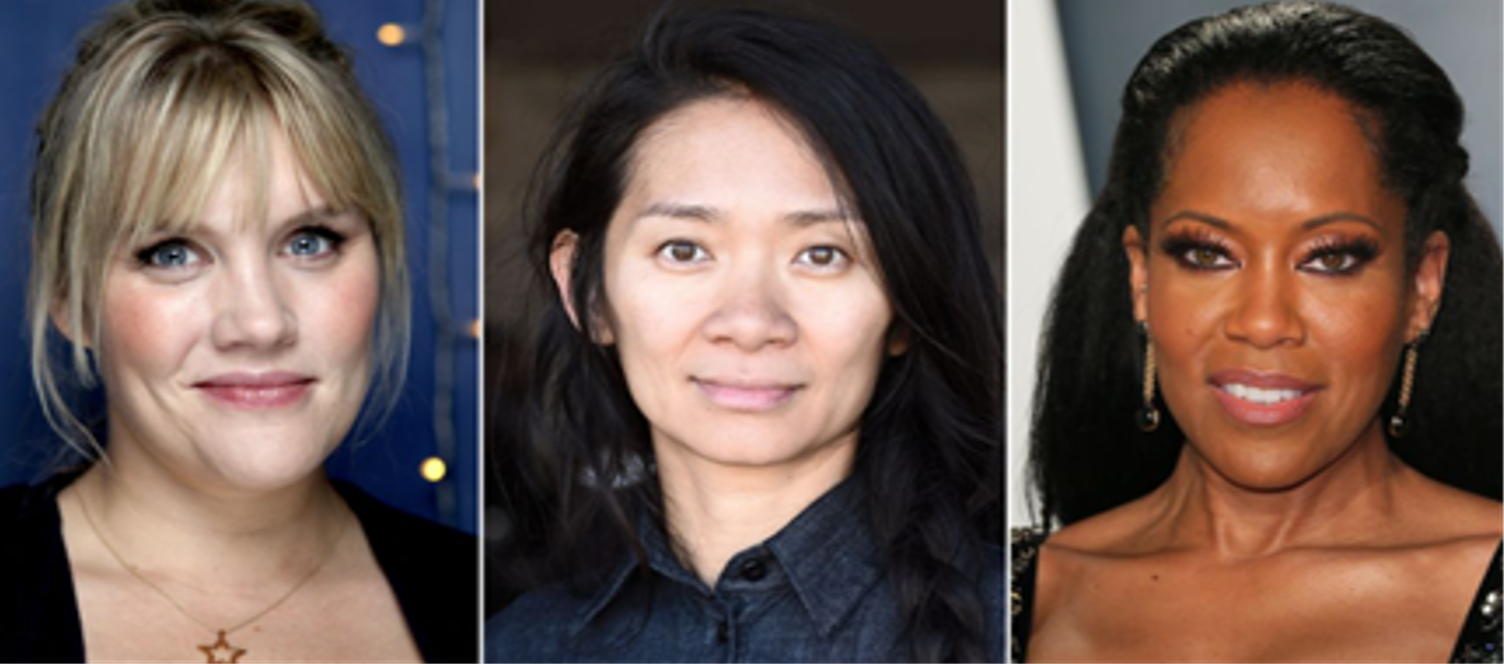
To begin with, 2021 saw three women directors, Chloé Zhao, Regina King and Emerald Fennell, being nominated for Best Director-Motion Picture at Golden Globes making this the first year for women representing a majority in the nominations. Nevertheless, despite the optimism these nominations might prompt, Hollywood’s film industry has long been and continues to be dominated by white, male directors, which results in systemic exclusions along both racial and gender lines. For example, a 1993 report by the Writers Guild of America West (WGA) illustrates the disparities revealing that among the 10,097 members of the Directors Guild of America, only 3% were African American, 1.8% Latino, 0.9% Asian, and a mere 0.2% American Indian. [1]
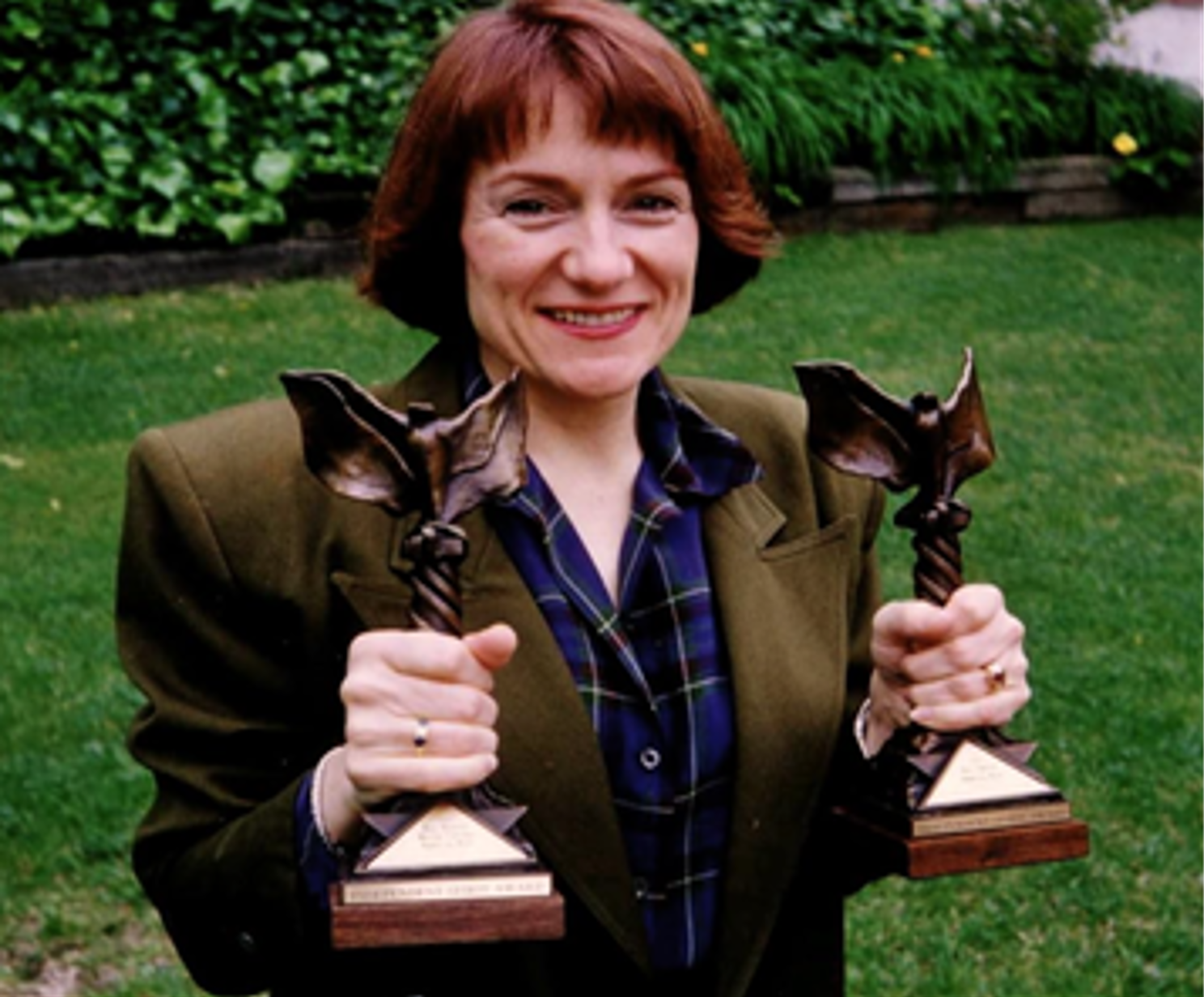
Martha Coolidge, former president of the Directors Guild of America and the successful director of films such as Valley Girl (1983), and Rambling Rose (1991) to mention a few, has described the situation for women directors as deeply troubling (interview with director, 2004). She herself directed no studio feature between 1997 and 2004 despite the success of her previous films in the box office. Since 2004 she has directed only three features for the big screen to this day, namely The Prince and Me (2004), Material Girls (2006), and I'll Find You(2019).
Statistics reveal that this systemic exclusion still holds strong in the 21st century. For instance, a survey of the top 250 highest-grossing films in the U.S. shows that the percentage of women directors declined from 11% in 2000 to just 6% in 2001. Additionally, the study found that over 90% of these films were directed by men, who also dominated nearly all cinematography roles. Female representation among screenwriters also dropped, falling to just 10%. [2]
The number of women directors stood at 4% in 2003. It was no surprise that during my 2003 research trip to Los Angeles, I came across a billboard that was hanging across Paramount Pictures Studio. It showed the head of an American politician and lawyer, Trent Lott, on top of an Oscar Statuette. The message underneath needs no extra comments: “"Even the U.S. Senate is more progressive than Hollywood. Female Senators: 14 %. Female Film Directors: 4 %." The billboard was apparently created by a local activist group as a critique of Hollywood’s gender bias.
The backlash against Hollywood’s gender and race inequality has oft made the headlines [3] in the last few decades with scholars, critics and activists also joining in the criticism. One example would be the establishment of the #OscarsSoWhitecampaign in 2015. Overall, although some improvement is visible, considering that women were once largely absent from film roles, nevertheless, there is still a long way to go in terms of equal representation. To bring this point home, the 2020 report on Hollywood’s diversity by UCLA University, highlights the real dimensions of the situation: “Hollywood seems to have turned a corner in the past few years with respect to the inclusion of women and people of color on the big screen… But behind the camera is a different story…. Change at the very top of the Hollywood power structure has been glacial at best. White men remain firmly in charge of the executive suites at the major studios, the privileged spaces where decisions are made about which films to greenlight, who will direct them, and how they will be marketed.” [4]
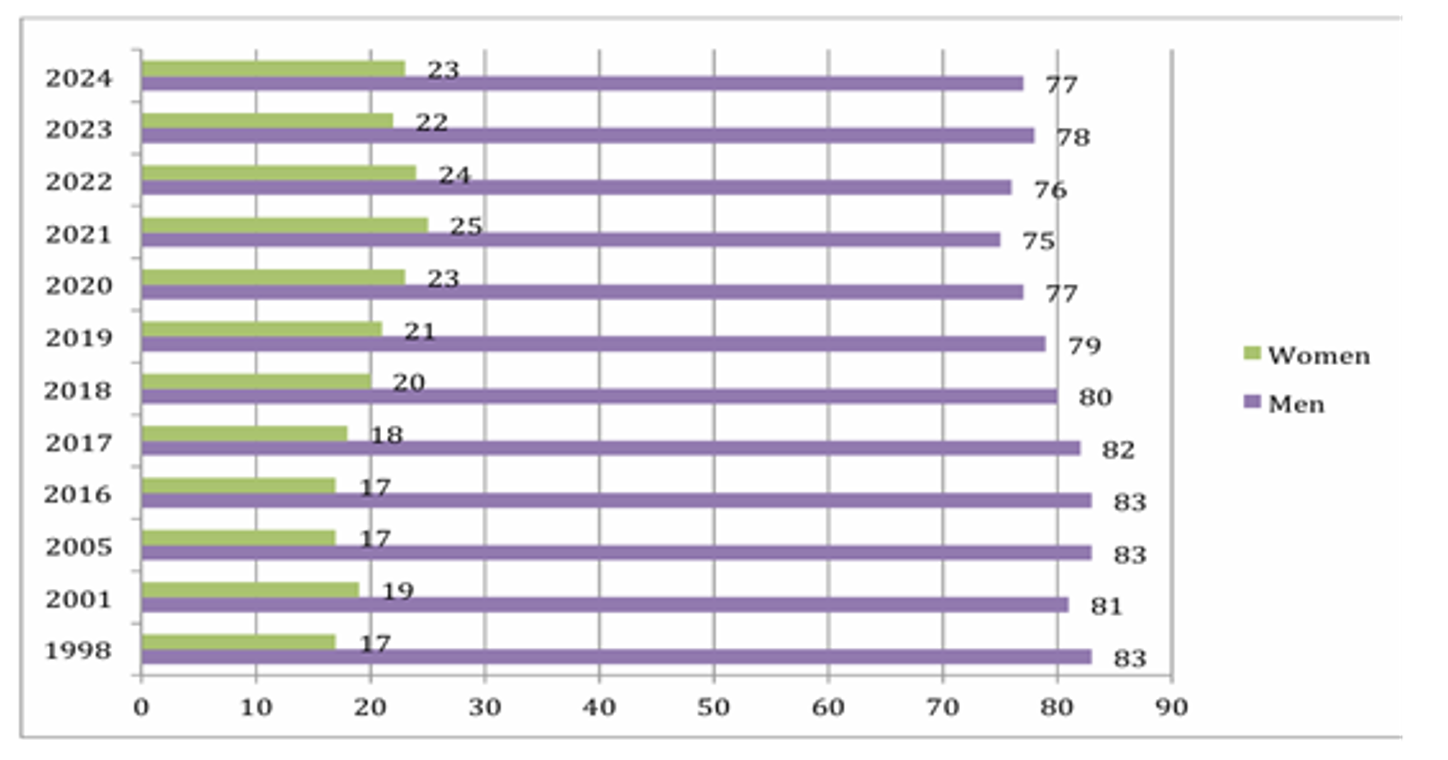
Martha M. Lauzen shares some startling statistics about percentages of women working behind the camera on the top 250 top grossing films in the USA between 1998 and 2024[5]. It becomes clear from the numbers that women are still vastly underrepresented, comprising only 23% of roles such as director, writer, editor, cinematographer, producer, and executive producer, as the graph below shows.
Introducing race and ethnicity into the discussion adds further complexity. From the late twentieth into the early twenty-first century, a growing number of historically marginalized communities began to take control of the camera, asserting their right to self-representation and challenging dominant narratives. Regarding Black filmmaking, directors such as Spike Lee, Mario Van Peebles, and John Singleton have achieved notable success in Hollywood. Their work has garnered both critical acclaim and mainstream popularity, contributing to the establishment of a new wave of African American films.
Yet, while Black male filmmakers have received significant visibility, Black women in cinema continue to face systemic erasure within Hollywood. As a matter of fact, it appears that women directors of color face a double exclusion. As Julie Dash, a Black filmmaker and activist has noted, being both woman and Black in the filmmaking industry creates a double barrier as black women are discriminated both against white women and against black men: “The media have helped create the whole aura of invisibility around Black women filmmakers. Sometimes they would interview us along with the black men filmmakers but wouldn’t include us in the final piece.” (qtd. in Rule C15). [7]
Despite being consistently overlooked by the mainstream industry, women filmmakers of color as well as diasporic women in the field have established a significant and influential presence within the independent film sector. Operating largely outside the commercial studio system, pioneering figures such as Madeline Anderson, Kathleen Collins, Zeinabu Irene Davis, Alile Sharon Larkin, Camille Billops, Julie Dash, Cheryl Dunye, Ava DuVernay have built an impressive body of work outside Hollywood.
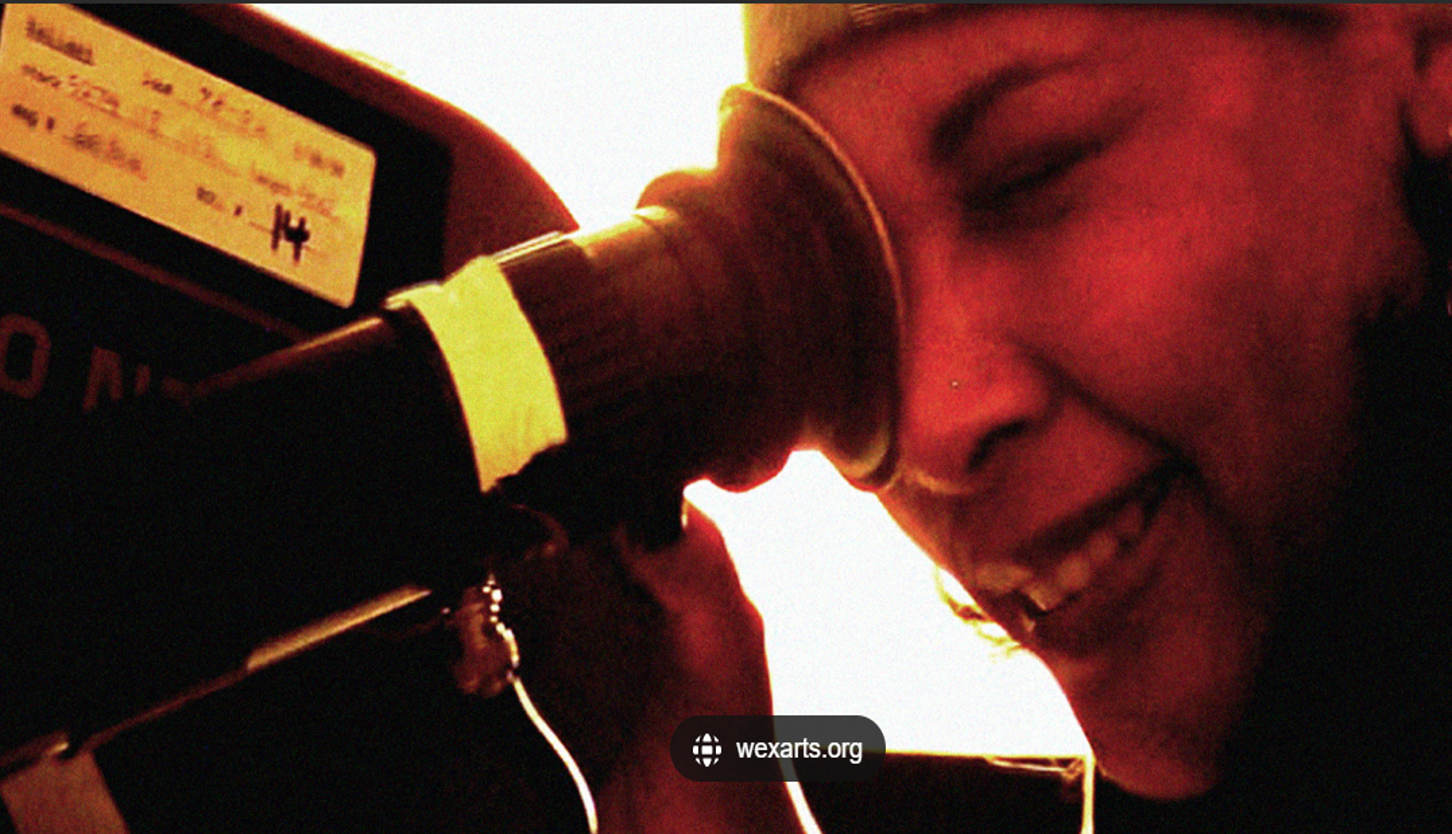
Dash for example, although working from the ‘margins,’ outside Hollywood, was the first African American woman to have a wide theatrical release with her film Daughters of the Dust (1991) which broke cinematic conventions in both form and content. Audiences unfamiliar with the film’s elliptical structure or lyrical pace may have found it challenging, even disorienting. But for many others, the film’s power lay precisely in its refusal to conform, namely its radical reenactment of memory which makes the film’s appeal and relevance carry into the present. The film did remarkably well in the box office, and it was named by the Filmmaker Magazine as “one of the 50 most important films ever made”, and in the 25th Annual Newark Black Film Festival, it was honored as “one of the most important cinematic achievements in Black Cinema in the 20th century.” [8]
The data and testimony above, collectively illuminate how access to creative power in Hollywood remains deeply unequal—where progress for women, particularly women of color, remains slow and hard-won. For decades, women have struggled not only to gain access to the industry but also to tell stories that reflect their own lived experiences. The gatekeeping mechanisms of Hollywood have operated through deeply entrenched networks that prioritize profit over inclusion and uphold conventional narratives that center male perspectives. This systemic exclusion has compelled many women, especially women of color and those from diasporic or marginalized communities, to seek alternative spaces to reclaim narrative authority. In this sense, the struggle is not merely about gender representation but also about disrupting the hierarchies that define the global media landscape. Hollywood, as both an economic and symbolic center of global filmmaking, becomes a battleground where access to visual storytelling is tightly controlled, often at the expense of diverse voices.
By illuminating the gendered and racial politics in Hollywood, the discussion can open up space for a reconsideration of the film industry’s policies in world cinema. The efforts of women filmmakers from different parts of the world reflect a broader movement to challenge and reconfigure the politics of cinematic representation as well as the inequality they face. While Hollywood continues to marginalize women, directors like Julie Dash in the U.S., Athina Rachel Tsangari in Greece, Alice Rohrwacher in Italy, Agnes Varda in France, Anca Damian in France, Haifaa Al-Mansour in Saudi Arabia, Nojoom Al Ghanem in the United Arab Emirates, Annemarie Jacir in Palestine, Deepa Mehta in India, Nadine Labaki in Lebanon, and Wanuri Kahiu in Kenya, to mention but a few, have carved out critical spaces within and beyond mainstream cinema.
These filmmakers do not merely insert themselves into the system—they actively interrogate and subvert dominant cinematic forms and structures. Their work often explores the intersections of race, gender and memory, using cinema as a platform to voice untold or suppressed narratives. For women directors of color, claiming the power of representation involves a double act of resistance: against patriarchal norms and against racialized industry expectations.
All in all, the stories these women tell are rooted in specific cultural or political contexts and yet resonate globally because they challenge the assumed universality of white Western male perspectives. In this way, the case of women's exclusion from Hollywood becomes a microcosm of a larger global reclamation, a movement toward visual sovereignty across borders.
Endnotes
[1] For more data see “Fairness in the Media Facts.” Internet. Available at
[2] In “Hollywood Remains a Boy’s Club: Female filmmakers face a Dearth of Projects in Action-Oriented Market.” http://www.detnews.com/2003/entertainment/0304/20/c01-139348.htm , Accessed 16 April, 2005.
[3] See for example, Maya’s Salam, “Hollywood is as White, as Straight and as Male as Ever, Hollywood Is as White, Straight and Male as Ever - The New York Times . The New York Times, Aug.2 2018., BBC News, Golden Globes 2021: Three female directors make history in nominations.. 4 February 2021. Golden Globes 2021: Three female directors make history in nominations , and Trey Williams, “Decisions in Hollywood Still Largely Made by White Men, New Study Shows.” February 6, 2020 https://www.thewrap.com/hollywood-diversity-inclusion-white-male-executives/
[4] cited in Trey Williams, “Decisions in Hollywood Still Largely Made by White Men, New Study Shows.” February 6, 2020 https://www.thewrap.com/hollywood-diversity-inclusion-white-male-executives/
[5] 27th Annual Edition, The Celluloid Ceiling: Employment of Behind-the-Scenes Women on Top Grossing. Copyright © 2025 https://womenintvfilmsdsu.edu/wp-content/uploads/2025/01/2024-Celluloid-Ceiling- Report.pdf
[6] Ibid.
[7] qtd. in Rule, Sheila. “Director Defies Odds with First Feature, ‘Daughters of the Dust.’” New York Times 12 Feb. 1992: C15.
[8] qtd. In Women Make Movies web site. Available at www.wmm.com.